
L.A.B.S. - the Laboratory Analysis Bureau of Solvers, Ep. 1
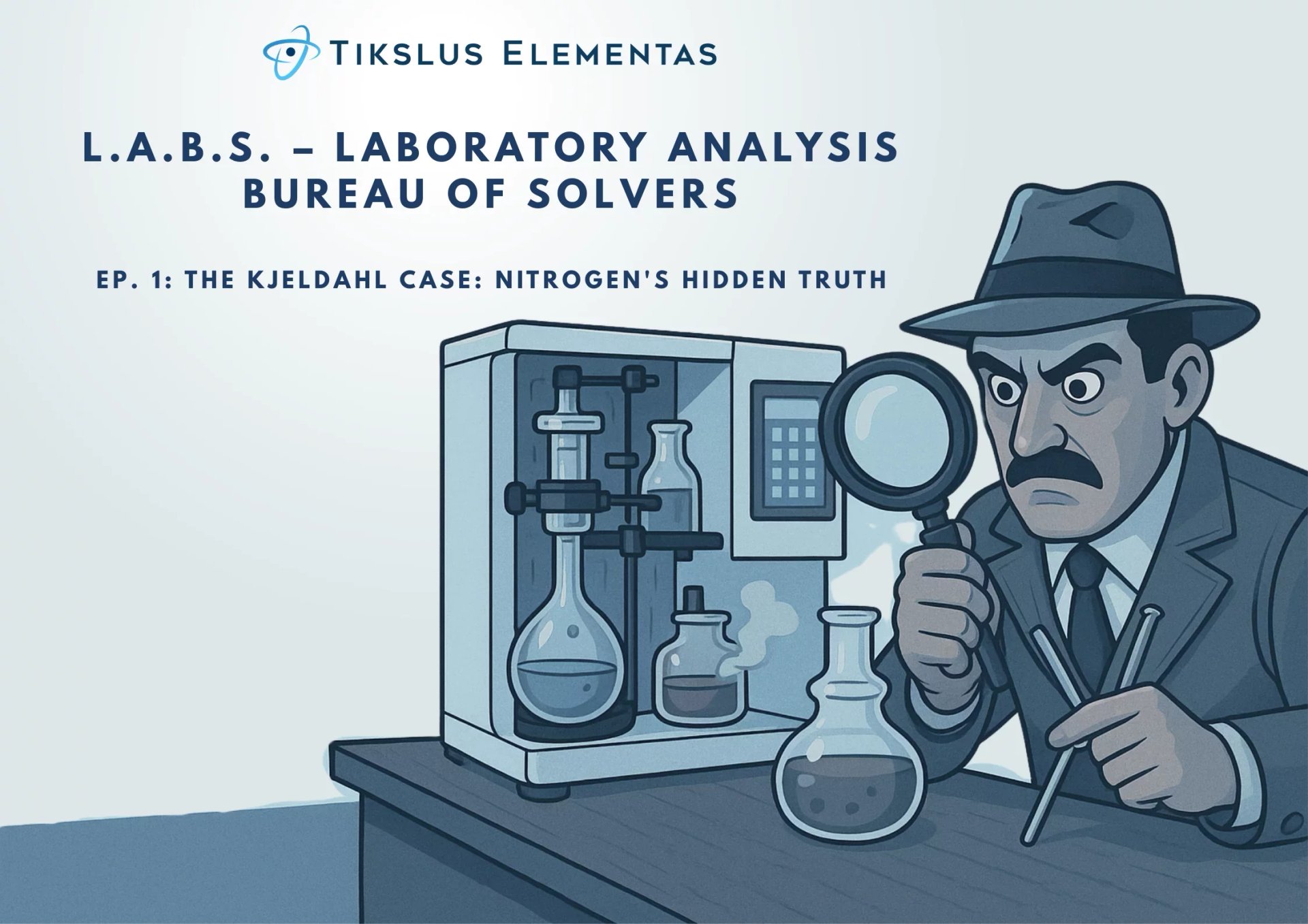
𝗪𝗲𝗹𝗰𝗼𝗺𝗲 𝘁𝗼 𝗟.𝗔.𝗕.𝗦. – 𝘁𝗵𝗲 𝗟𝗮𝗯𝗼𝗿𝗮𝘁𝗼𝗿𝘆 𝗔𝗻𝗮𝗹𝘆𝘀𝗶𝘀 𝗕𝘂𝗿𝗲𝗮𝘂 𝗼𝗳 𝗦𝗼𝗹𝘃𝗲𝗿𝘀!
L.A.B.S. is our LinkedIn series where we break down laboratory processes in a clear way. Today, we’re cracking the case of nitrogen - the hidden element behind protein content in food, feed, and fertilizer.
The Case: Protein is rich in nitrogen, so measuring nitrogen reveals protein content. 𝗢𝘂𝗿 𝘁𝗼𝗼𝗹 𝗼𝗳 𝗰𝗵𝗼𝗶𝗰𝗲? 𝗧𝗵𝗲 𝗞𝗷𝗲𝗹𝗱𝗮𝗵𝗹 𝗠𝗲𝘁𝗵𝗼𝗱 the gold standard for nitrogen analysis.
🔎𝗦𝘁𝗲𝗽 𝟭: 𝗗𝗶𝗴𝗲𝘀𝘁𝗶𝗼𝗻. We heat the sample with sulfuric acid and a catalyst (like copper or selenium) to convert nitrogen into ammonium (NH₄⁺).
🔎𝗦𝘁𝗲𝗽 𝟮: 𝗗𝗶𝘀𝘁𝗶𝗹𝗹𝗮𝘁𝗶𝗼𝗻. Lye (NaOH) turns ammonium into ammonia (NH₃), which is distilled and trapped in boric acid, isolating the nitrogen clue.
🔎𝗦𝘁𝗲𝗽 𝟯: 𝗧𝗶𝘁𝗿𝗮𝘁𝗶𝗼𝗻. We titrate the ammonia with a standard acid. The amount used tells us the nitrogen level, key to calculating protein content.
𝗪𝗵𝘆 𝗜𝘁 𝗠𝗮𝘁𝘁𝗲𝗿𝘀? Titration completes the puzzle by precisely measuring ammonia, which tells us how much nitrogen, and therefore protein, is in the sample.
We’ve cracked the case using the Kjeldahl Method—digestion, distillation, and titration, leading to one truth: accurate protein analysis.
Stay tuned for more lab mysteries—solved. 🧪
Get in touch

Premium quality laboratory equipment and services.
© 2026 All rights reserved.